By Damian Rezaee
Part I: Artificial Intelligence Rewires Biomechanics
The field of biomechanics has historically depended on expensive laboratories, optical marker systems, and highly trained analysts. That model is undergoing a fundamental shift. Abdelmohsen (2025) found that crucial AI methods, including machine learning, deep learning, and computer vision, now facilitate automated, accurate, and real-time analysis of complex biomechanical data derived from wearable sensors, video, and other modalities. These advances have expanded biomechanical assessment beyond traditional laboratory limits, fueling the development of markerless motion capture, personalized rehabilitation, and immersive virtual training environments.
The impact on sports medicine is particularly well-documented. A scoping review of 73 peer-reviewed studies found that random forest AI models predicted hamstring injuries with 85% accuracy across three studies of moderate quality, and that the implementation of integrated AI systems resulted in a 23% reduction in reinjury rates (Khan et al., 2025). These are not marginal improvements; they represent a meaningful shift in how clinicians and coaches can intervene before injuries occur.
On the rehabilitation side, AI is proving equally consequential. According to a network meta-analysis published in Frontiers in Bioengineering and Biotechnology, AI technologies process complex physiological, biomechanical, and behavioral data to provide real-time, individualized feedback, dynamically adjust training intensity, and customize therapy plans based on patient-specific progress (Liu et al., 2025). Robotic exoskeletons and AI-guided therapeutic exergaming demonstrated significant improvements in pain relief, functional recovery, and range of motion for patients with musculoskeletal disorders.
Wearable technology is extending these capabilities from clinical settings onto athletic fields. Khan et al. (2025) reported that convolutional neural networks capture spatial movement patterns, while Long Short-Term Memory networks learn temporal dynamics such as fatigue-related changes, powering applications from squat classification to gait asymmetry detection. Graphene-based garments achieved over 90% accuracy in squat recognition with a latency under 10 milliseconds in laboratory trials, though field conditions introduce additional variables, including sensor attachment reliability and calibration drift.
Spinal medicine is another area experiencing significant transformation. Frontiers in Bioengineering and Biotechnology reported that AI-assisted single-camera, markerless motion capture now enables low-cost kinematic parameter extraction via deep learning, providing gait parameters previously only achievable with expensive, lab-bound equipment (Wang & Zhang, 2025). Researchers have also developed patient-specific spine digital twin technology that enables quantitative calculation of intervertebral disc strain through finite element analysis, without requiring full 3D reconstruction.
Despite the promise, substantial challenges remain. Abdelmohsen (2025) identified persistent issues in the generalization of models across populations, the interpretation of predictions, data privacy, and ethical considerations. Future progress will require standardized software and datasets, explainable AI strategies, and interdisciplinary collaboration to fulfill the potential of AI-driven biomechanics.
Part II: The Cloning Frontier – Science and a Startup That Shocked Silicon Valley
Distinguishing Therapeutic from Reproductive Cloning
Before examining recent organizational activity, a conceptual distinction is essential. Therapeutic cloning involves the creation of stem cells genetically matched to a patient for use in medicine and transplants. It is an active and legitimate area of research. Reproductive cloning, by contrast, refers to the creation of a genetically identical human being, a pursuit that is both technically hazardous and broadly prohibited by law. Researchers extracted stem cells from the first cloned human embryos in 2013, demonstrating therapeutic potential, but the process required the destruction of five-day-old embryos and relied on 100 to 200 donated human eggs per attempt, with animal cloning survival rates consistently below 5% and common outcomes including premature aging, organ abnormalities, and immune system dysfunction (Doctronic, 2026).
Scientists such as Dr. George Church at Harvard acknowledge that the technical barriers to human reproductive cloning are relatively low compared to the ethical, regulatory, and biological safety challenges (SciencePulses, 2025). That assessment makes the legal framework all the more important.
R3 Bio: A Startup Pitching Brainless Clones
In March 2026, a California-based stealth startup called R3 Bio stepped into public view. The company announced it had raised funding to develop nonsentient monkey organ sacks as an alternative to animal testing, drawing backing from billionaire Tim Draper, Singapore-based fund Immortal Dragons, and life-extension investors LongGame Ventures (Hao & Regalado, 2026). However, a subsequent investigation by MIT Technology Review revealed a far more ambitious internal vision.
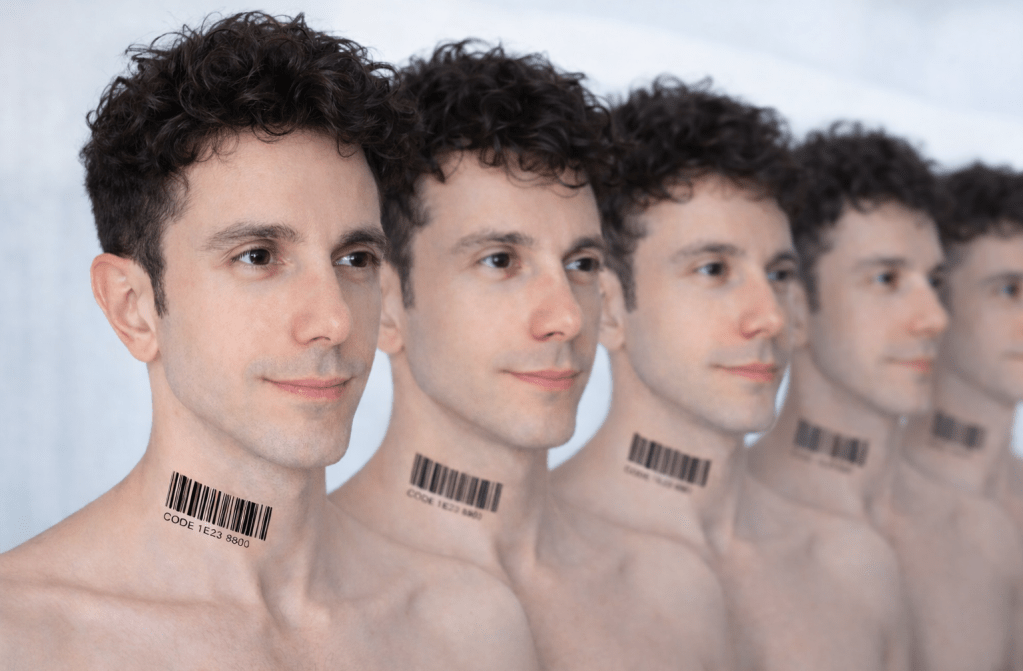
Founder John Schloendorn had privately pitched what he described as brainless clones: genetically engineered bodies with only enough brain structure to sustain life, available in case an individual needed a replacement organ. In the most extreme formulation, Schloendorn proposed that a person’s brain could eventually be transplanted into a younger clone body, effectively gaining a second lifespan (Hao & Regalado, 2026). In September 2025, Schloendorn and co-founder Alice Gilman presented this concept at a closed Abundance Longevity event in Boston, organized by entrepreneur Peter Diamandis, before approximately 40 attendees at $70,000 per ticket, under the session title Full Body Replacement (DeSalles, 2026). Investor Boyang Wang confirmed he contributed $500,000 to R3 in 2024 after the company demonstrated it had produced mice without complete brains.
On the technical side, R3 Bio reportedly uses a histone demethylase protein to erase epigenetic memory, a method that boosted rodent cloning success rates by an order of magnitude and was instrumental in the first successful monkey clone in China in 2018 (UBOS, 2026). The company also reportedly targets genes such as EMX2 and FGF8 using CRISPR-Cas9 to suppress neocortical formation while preserving a functional brainstem.
Expert reaction was pointed. Jose Cibelli, a Michigan State University researcher who was among the first scientists to attempt cloning human embryos in the early 2000s, stated that the concept sounded crazy and questioned how safety could even be defined when attempting to create an abnormal human (Hao & Regalado, 2026). Italian surgeon Sergio Canavero, who has independently proposed head and brain transplants, said he was approached by Schloendorn and immediately objected on biomechanical grounds that a head transplant on a two- or three-year-old would be physiologically incompatible. Hao and Regalado (2026) confirmed that MIT Technology Review found no evidence that R3 has produced an organ sack or anything beyond rodent-scale cloning experiments.
A related stealth startup, Kind Biotechnology, based in New Hampshire and headed by anti-aging researcher Justin Rebo, a sometime collaborator of Schloendorn’s, is separately focused on replacing internal organs rather than the whole body (Hao & Regalado, 2026). Together, these organizations represent a small but well-funded fringe within the broader longevity investment ecosystem.
The Legal Framework
The international legal prohibition on reproductive human cloning is firm and multilayered. The Additional Protocol to the Council of Europe’s Convention on Human Rights and Biomedicine, signed in Paris on January 12, 1998, entered into force on March 1, 2001. It explicitly bans any intervention seeking to create a human being genetically identical to another human being, whether living or dead (American Center for Law and Justice, n.d.). The prohibition rests on the principle that deliberate production of genetically identical human beings violates the dignity and integrity of human beings both as individuals and as members of the human species (Council of Europe Parliamentary Assembly, 1997).
At the global level, the UNESCO Universal Declaration on the Human Genome and Human Rights, adopted unanimously by the General Conference in November 1997 and endorsed by the United Nations General Assembly in December 1998, states in Article 11 that practices contrary to human dignity, such as the reproductive cloning of human beings, shall not be permitted (Library of Congress, 2001).
National laws reinforce this framework. Thirteen U.S. states explicitly prohibit reproductive cloning, and countries including France, Germany, and Canada ban the creation of even clonal embryos for research, while the United Kingdom, Sweden, China, and Israel permit clonal embryo creation for medical research under regulatory oversight (Hao & Regalado, 2026; Center for Genetics and Society, n.d.).
The Intersection: Where AI and Bioengineering Converge
The two threads in this article are not as separate as they first appear. The same AI capabilities now used to analyze an athlete’s gait or predict a lumbar injury are increasingly deployed in genetic and biomedical research pipelines. Deep learning models assist with embryo imaging and genomic sequencing; computer vision tools are used in cellular biology. As those tools become more powerful, the technical barriers to the more radical proposals discussed in Part II will continue to fall.
The legitimate applications of AI in biomechanics, including precision prosthetics, markerless movement diagnostics, and AI-guided rehabilitation, represent a genuine and well-evidenced advance in human health capability. The proposals emanating from R3 Bio’s closed seminars illustrate what can happen when longevity capital operates ahead of regulatory frameworks and scientific consensus. Science is moving faster than the governance structures designed to contain it. That gap is where the most consequential bioethics debates of the next decade will be concentrated.
References
Abdelmohsen, A. M. (2025). Artificial intelligence in biomechanics: A narrative review of current applications in diagnostic and physical rehabilitation. Physiotherapy Research International, 30(4), e70120. https://doi.org/10.1002/pri.70120
American Center for Law and Justice. (n.d.). Human cloning regulation in Europe. https://aclj.org/pro-life/human-cloning-regulation-in-europe
Center for Genetics and Society. (n.d.). Human cloning policies. https://www.geneticsandsociety.org/internal-content/human-cloning-policies
Council of Europe Parliamentary Assembly. (1997). Prohibition of cloning human beings (Doc. 7884 Rev.). https://pace.coe.int/files/7825/html
DeSalles, H. (2026, April 2). Funded startup proposes brainless cloned bodies for aging people to use. Thought Catalog. https://thoughtcatalog.com/holden-desalles/2026/04/funded-startup-proposes-brainless-cloned-bodies-for-aging-people-to-use/
Doctronic. (2026, January 18). Understanding human cloning: What it is, how it works, and its potential uses. https://www.doctronic.ai/blog/human-cloning-what-it-is-how-it-works-and-its-potential-uses-153285/
Hao, K., & Regalado, A. (2026, March 30). Inside the stealthy startup that pitched brainless human clones. MIT Technology Review. https://www.technologyreview.com/2026/03/30/1134780/r3-bio-brainless-human-clones-full-body-replacement-john-schloendorn-aging-longevity/
Khan, I., Murad, S., Khalid, M., Ramzan, H., & Khan, H. H. (2025). Wearables, smart textiles & AI biomechanics in sports: A narrative review. Premier Journal of Science, 14, 100112. https://premierscience.com/pjs-25-1032/
Khan, R., Ahmed, S., & Patel, V. (2025). Artificial intelligence in sports biomechanics: A scoping review on wearable technology, motion analysis, and injury prevention. Bioengineering, 12(8), 887. https://doi.org/10.3390/bioengineering12080887
Library of Congress. (2001). Human cloning: International law. https://tile.loc.gov/storage-services/service/ll/llglrd/2019669588/2019669588.pdf
Liu, Y., Chen, X., & Park, S. (2025). Effectiveness of AI-assisted rehabilitation for musculoskeletal disorders: A network meta-analysis of pain, range of motion, and functional outcomes. Frontiers in Bioengineering and Biotechnology, 13, Article 1660524. https://doi.org/10.3389/fbioe.2025.1660524
SciencePulses. (2025, June 27). Human cloning in 2025: Stunning breakthroughs that could change everything. https://sciencepulses.com/human-cloning-in-2025/
UBOS. (2026). R3 Bio’s brain-less human clones target organ harvesting — breakthrough and controversy. https://ubos.tech/news/r3-bios-brain-less-human-clones-target-organ-harvesting-breakthrough-and-controversy/
Wang, L., & Zhang, H. (2025). Main elements of current spine biomechanics research: Model, installation and test data. Frontiers in Bioengineering and Biotechnology, 13, Article 1646046. https://doi.org/10.3389/fbioe.2025.1646046
 Damian Rezaee
Leave a comment